Free flight Radio Assist
Controlled and free?
Radio-assisted free-flight - an oxymoron if ever there was one! How can a model still be regarded as free-flight if it has radio control? To increase the confusion, the extent of the radio intrusion to reduce the free flying of the model varies depending on several factors such as model size and intent of the flyer. So, let’s talk about why we would want to do it.
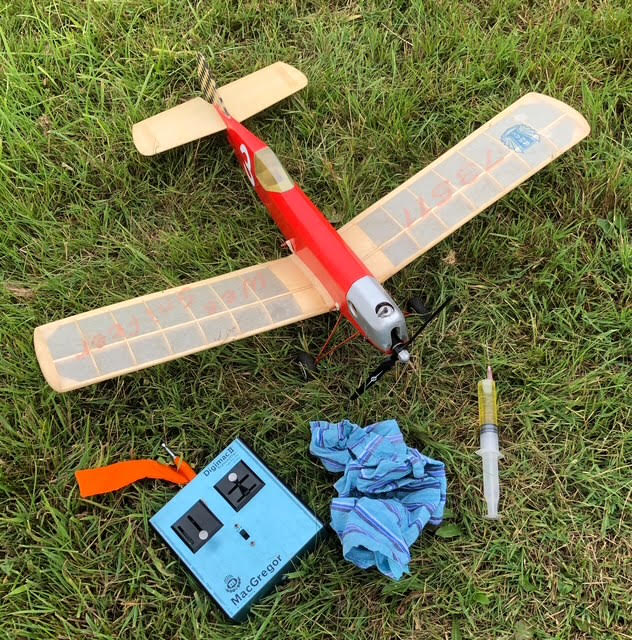
What
Flying sites are rapidly becoming both scarce and smaller for free flight model flying. The
fitting of some measure of radio-control can help to keep models in the flying field or away from obstacles. Many early radio-controlled models had single channel to do exactly that. As technology advanced the boundaries were pushed to the point where today’s radio control models are able to all that full sized aircraft can do, and more.
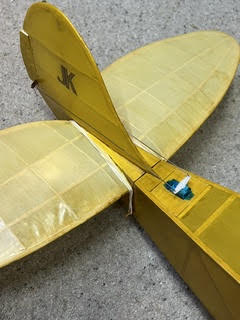
How
Generally speaking a radio-controlled model will not fly unaided, (putting aside for a minute those with gyro and high tech stabilisation). Radio-assisted models on the other hand have intrinsic stability and will fly free, like a model without radio control. Basically, radio is added to a free flight design, usually a rudder and elevator. The extent of the control is more akin to inflight trim changes with extra movement to avoid hazards and to get out of thermals. The ability to land close to the launch site is also a huge advantage. The addition of either an engine/electric motor cut off or a throttle is often an advantage, especially on larger models. This enables the model to take off more briskly, then settle down to cruise mode for the flight.
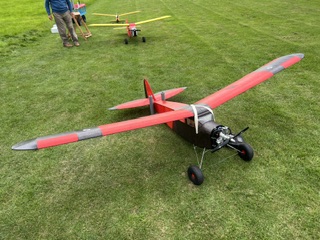
Why
All of this enables the flying of models in smaller spaces, and for physically less able modellers to be able to retrieve their models without having to walk a long distance. Needless to say, flyaways are less likely! Small and less powerful models can be flown in amongst free flight models using the radio to keep the models closer and hopefully preventing a flyaway. Larger models are best flown and organised as per radio models with a ‘proper’ flight line.
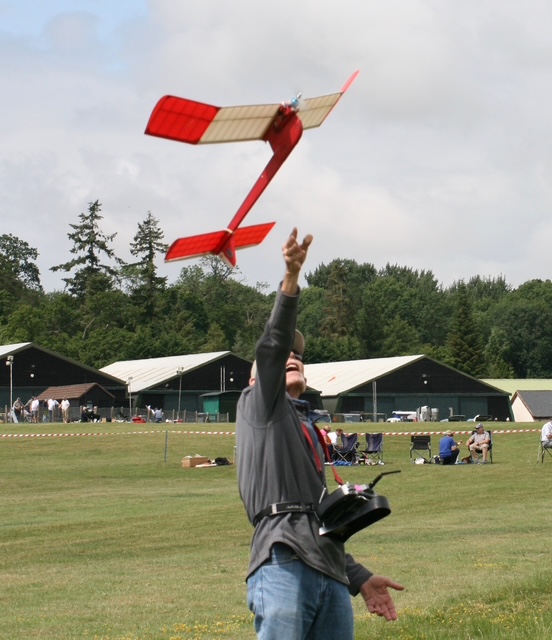
Competitions
The use of radio assist has given rise to several competitions such as single channel spot landing, vintage power duration and precision. There is also a radio assisted scale competition. Rules for these comps can be found here. [URL link to insert]
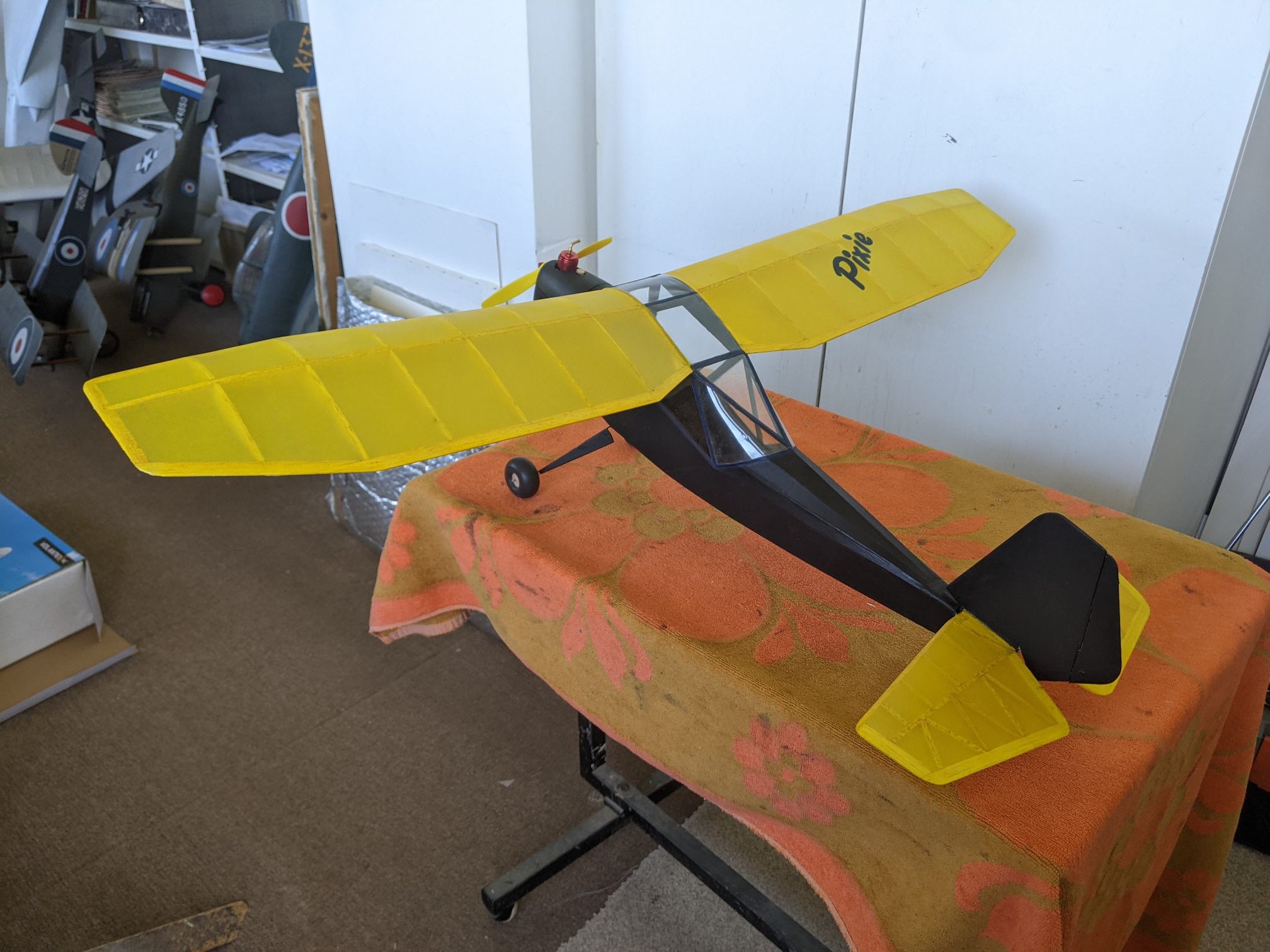
Pixie by Ivan Taylor
Ivan writes: My first model to incorporate radio was an enlarged Keil Kraft Pixie semi scale job. This is a very cute cabin model for rubber power and I'm sure I built the kit when I was 10 years old, so that's 70 years ago. I decided on a 36" span enlargement and used a 0.25cc SAMS diesel which is spot on for power.
I have been using a single function, which is either rudder or one aileron depending on the type of model.
The radio receiver was extracted from a small Polystyrene ready built toy which obviously had many functions and came with the transmitter. The good thing is that you can obtain spare receivers for further models at a very reasonable price and they bind with the transmitter.
The Pixie proved to be a lovely flyer and provided me with the practice I needed in radio flying. Just a small rudder is used. It must be said, and it is very important, that all these models, especially as we get on to the pure scale models, must be trimmed free flight. The single function radio is only to keep the model in the immediate vicinity so that nice long flights can be had on a radio club field. I am fortunate to belong to a very friendly club only 30min drive away.